
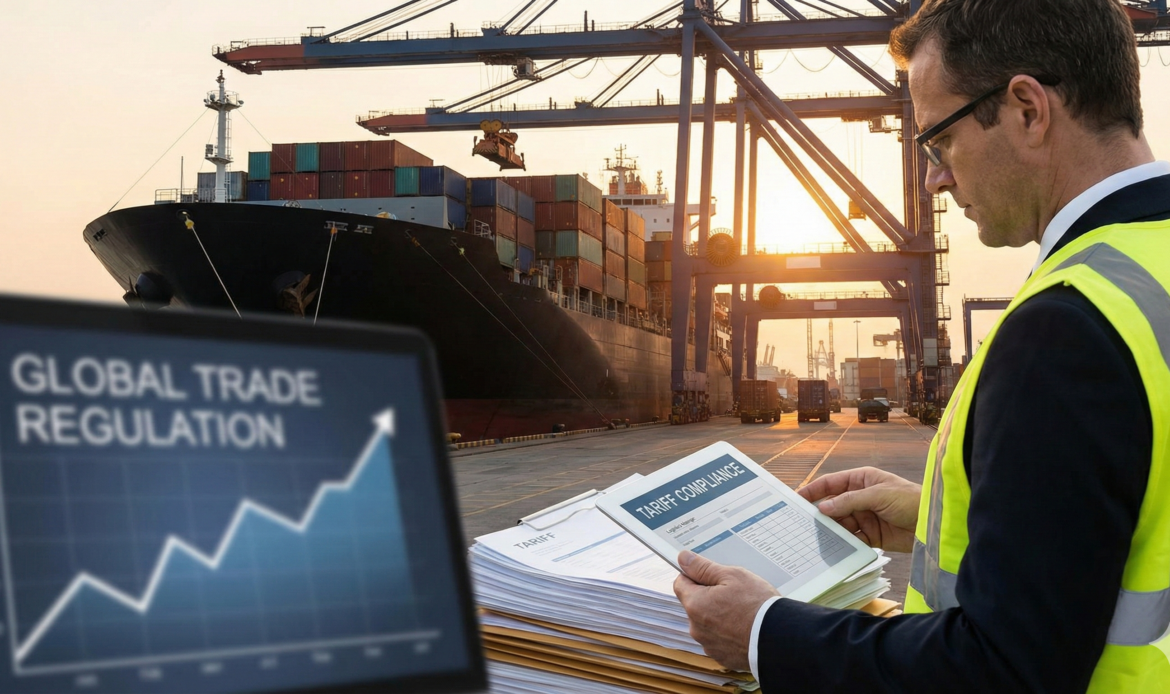
Global supply chains in 2026 are operating in an environment where tariffs are no longer occasional trade measures. They have become a constant feature of geopolitical strategy, economic policy, and regulatory enforcement. What once used to be a pricing or sourcing concern has now evolved into a full-scale trade compliance challenge that touches procurement, logistics, legal, finance, and risk management functions simultaneously.
In recent years, duties of 20% to 25% have been imposed across critical sectors such as electronics, steel, textiles, automotive components, and semiconductors. Industry research shows that 60% of U.S. companies experienced logistics cost increases of 10% to 15% due to tariff pressures, while one in four global firms faced tariff-related penalties due to customs, classification, or documentation errors during regulatory reviews.(1)
The result is clear. Tariffs are no longer just a cost burden. They are a compliance visibility problem.
For many organizations, the real risk is not the tariff rate itself. It is the inability to prove HS code classification accuracy, validate rules of origin, and maintain audit-ready customs documentation across a fragmented supplier ecosystem.
Tariffs Have Shifted from Trade Policy to Compliance Risk
Earlier, tariff impact was absorbed into pricing strategy or negotiated into supplier contracts. Today, incorrect handling of tariff documentation can lead to shipment holds, penalties, retroactive duty recovery, and regulatory investigations.
A single error in product classification or origin declaration can trigger customs scrutiny across entire product lines. This shifts tariffs from a commercial concern to a regulatory compliance exposure.
The Hidden Compliance Challenges Tariffs Create
| Compliance Challenge | What the Problem Is | Why It Matters |
| Misclassification of HS Codes | HS codes change often and are interpreted differently across countries. Many companies still use spreadsheets or old ERP data. | Wrong codes can lead to heavy fines, sometimes up to four times the duty owed or 100% of the duty value.(2) |
| Rules of Origin Complexity | Products sourced from multiple countries make it hard to correctly determine origin and FTA eligibility. | Companies may lose tariff benefits or face penalties for incorrect origin claims. |
| Supplier Documentation Gaps | Trade documents are spread across suppliers and systems instead of being stored centrally. | During audits, missing or delayed documents increase the risk of fines and shipment holds. |
| Lack of Real-Time Tariff Visibility | Teams don’t have live updates on tariff changes and rely on outdated information. | This results in incorrect customs declarations and compliance issues during reviews. |
How Tariff Compliance Gaps Disrupt Supply Chain Operations
Tariff-related compliance issues ripple across the supply chain and create operational drag:
- Shipments delayed due to documentation queries, with 30–40% of global shipments held for additional customs review linked to documentation or classification gaps.(3)
- Broader customs audits across product categories
- Supplier disputes over origin claims
- Landed cost forecasting challenges reported by over 60% of manufacturers
- Supplier diversification without compliance validation
The root cause is the absence of centralized trade compliance visibility.
Why Traditional Compliance Processes Fail Under Tariff Pressure
Many organizations still manage customs and trade compliance manually:
- HS codes stored in spreadsheets without version control, increasing classification errors and inconsistent duty application.
- Origin documentation maintained locally by procurement teams, disconnected from global compliance oversight.
- Regulatory updates tracked through emails and newsletters, leaving teams unaware of real-time tariff schedule changes.
- Audit evidence assembled reactively rather than maintained proactively, exposing companies to enforcement risk during customs reviews.
These approaches break down quickly in a volatile tariff environment where documentation accuracy, version-controlled classification, and proactive audit readiness are essential.
The Growing Need for Digital Tariff and Trade Compliance Management

To manage tariff-driven complexity and rising regulatory scrutiny, organizations need structured, digital capabilities that bring visibility, accuracy, and audit readiness into trade operations:
- Centralized HS Code and Product Classification to ensure consistent, version-controlled classification across regions and product lines.
- Automated Rules of Origin Validation to accurately determine FTA eligibility and prevent incorrect origin claims.
- Supplier Compliance Documentation Tracking to maintain accessible, up-to-date origin and trade records across the supplier ecosystem.
- Real-Time Regulatory Monitoring to stay aligned with rapidly changing tariff schedules and trade policies.
- Audit Trails and Evidence Management to ensure documentation is readily available during customs reviews and regulatory audits.
Strategic Shift From Tariff Reaction to Tariff Readiness
Leading organizations are embedding trade compliance into sourcing decisions, validating documentation before shipment, integrating compliance into supply chain systems, and continuously monitoring regulatory changes. They are moving beyond reactive responses to tariff announcements toward forward-looking readiness that anticipates compliance risk and operational impact.
Tariff readiness is becoming a core supply chain capability, one that connects compliance, procurement, logistics, and risk functions into a cohesive, resilient framework.
How Compliance Cart Enables Tariff-Ready Supply Chains
Compliance Cart provides centralized visibility across product classification, supplier documentation, real-time regulatory tracking, and audit evidence, all within a single system. By bringing these critical compliance functions together, Compliance Cart enables compliance, sourcing, and logistics teams to collaborate effectively, maintain consistent documentation, and ensure regulatory alignment across global operations.
By digitizing trade compliance processes and embedding them into core supply chain workflows, organizations can move from reactive firefighting of tariff issues to proactive, structured, and audit-ready tariff management.
Conclusion
Tariffs are now a permanent feature of global trade volatility. The true challenge is no longer the duty percentage but the compliance gaps they expose across supply chains.
Organizations that continue to rely on fragmented documentation, manual tracking, and siloed processes will face increasing shipment delays, audit scrutiny, and financial exposure.
Those that invest in centralized, digital trade compliance capabilities will build supply chains that are tariff-ready, audit-ready, and resilient to disruption.
In 2026 and beyond, tariff management is no longer just a trade function. It has evolved into a compliance discipline that defines how prepared and resilient a global supply chain truly is.
Build tariff-ready, audit-ready, and disruption-resilient supply chains with a unified compliance approach. Book a demo with Compliance Cart.
FAQs – Tariffs and Trade Compliance
1. Why are tariffs considered a compliance challenge today?
Frequent tariff changes require accurate product classification, origin validation, and complete documentation to prevent penalties, shipment delays, and customs scrutiny.
2. What is the biggest risk in tariff compliance?
Misclassification of HS codes and incorrect rules of origin declarations, both of which can trigger audits, financial penalties, and retroactive duty recovery.
3. How do tariffs affect supplier management?
They demand stronger supplier documentation, verified origin proofs, and continuous due diligence to ensure customs and trade compliance.
4. Can digital tools reduce tariff compliance risks?
Yes. Automated classification controls, origin validation workflows, and real-time regulatory alerts significantly reduce errors and audit exposure.
5. Which industries face the highest tariff compliance risks?
Electronics, automotive, retail, textiles, and heavy manufacturing, where complex global sourcing increases the risk of classification and origin errors.