 Priyanka Nema
The Digital Product Passport is no longer a future EU concept. It is becoming mandatory infrastructure under the Ecodesign for Sustainable Products Regulation. Starting with batteries in 2027 and expanding across key industries by 2030, DPP will require structured, machine-readable product data covering composition, origin, and environmental impact.
Market investment reflects this shift. The global Digital Product Passport platforms market is projected to grow from approximately USD 2.4 billion in 2025 to over USD 10.8 billion by 2035, signaling long-term structural adoption across industries.(1)
For manufacturers and exporters, DPP is not just compliance. It is emerging as a competitive data asset.
What Is a Digital Product Passport (DPP)?
A Digital Product Passport is a structured digital identity linked to a physical product. It consolidates lifecycle data into a standardized, machine-readable format accessible throughout the product’s lifespan.
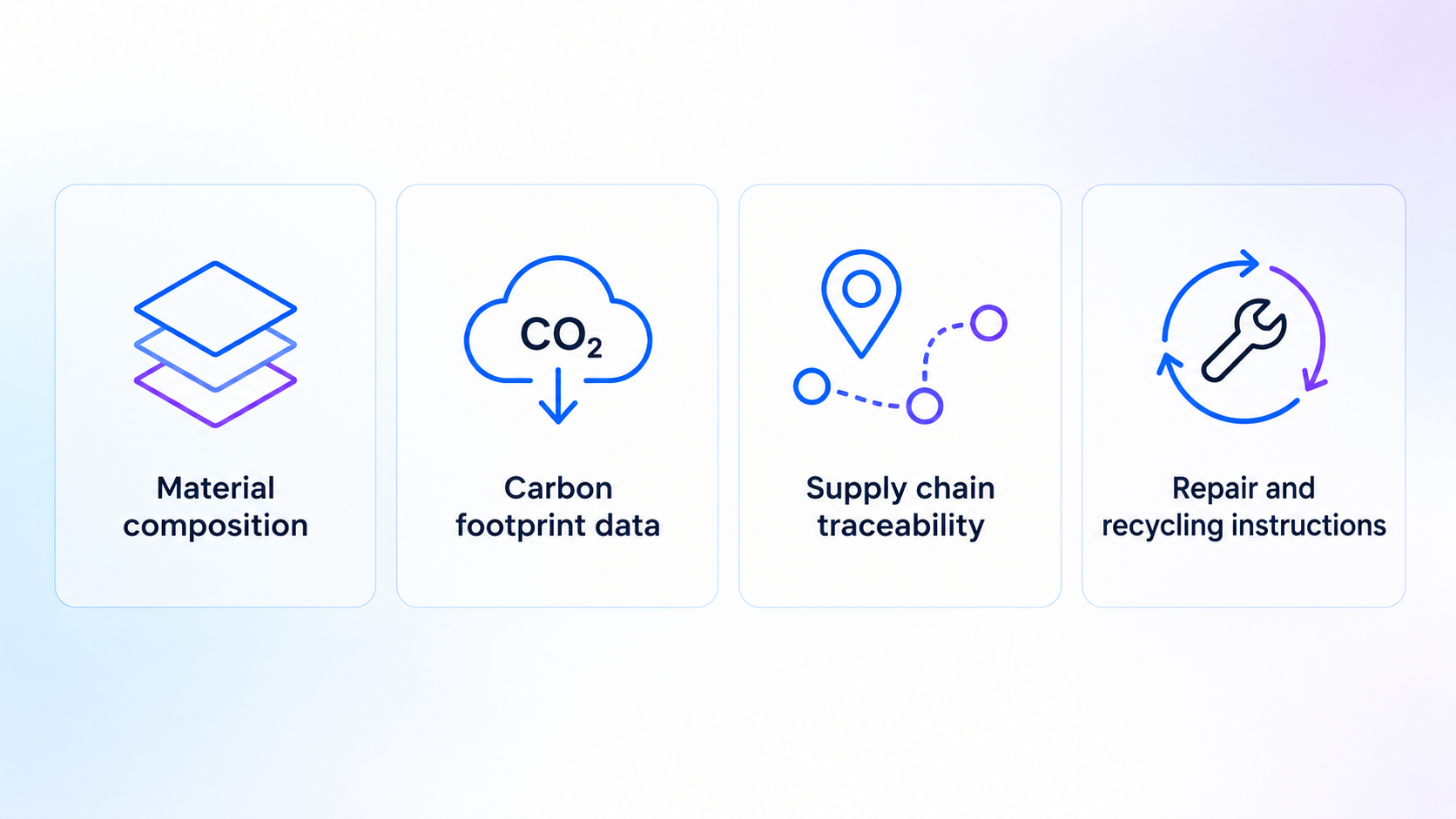
A compliant DPP includes material composition, carbon footprint data, supply chain traceability, and repair and recycling instructions.
The regulation entered into force in 2024, creating the legal basis for sector-specific delegated acts that will define detailed requirements by product category. The scope will expand in phases, starting with high-impact sectors such as batteries, textiles, electronics, and construction materials. (2)
Why DPP Is Viewed as a Compliance Burden
Initial reactions to DPP often center on complexity. The regulation requires granular, verified product data across multiple lifecycle stages. For many enterprises, that data is fragmented across departments and systems.
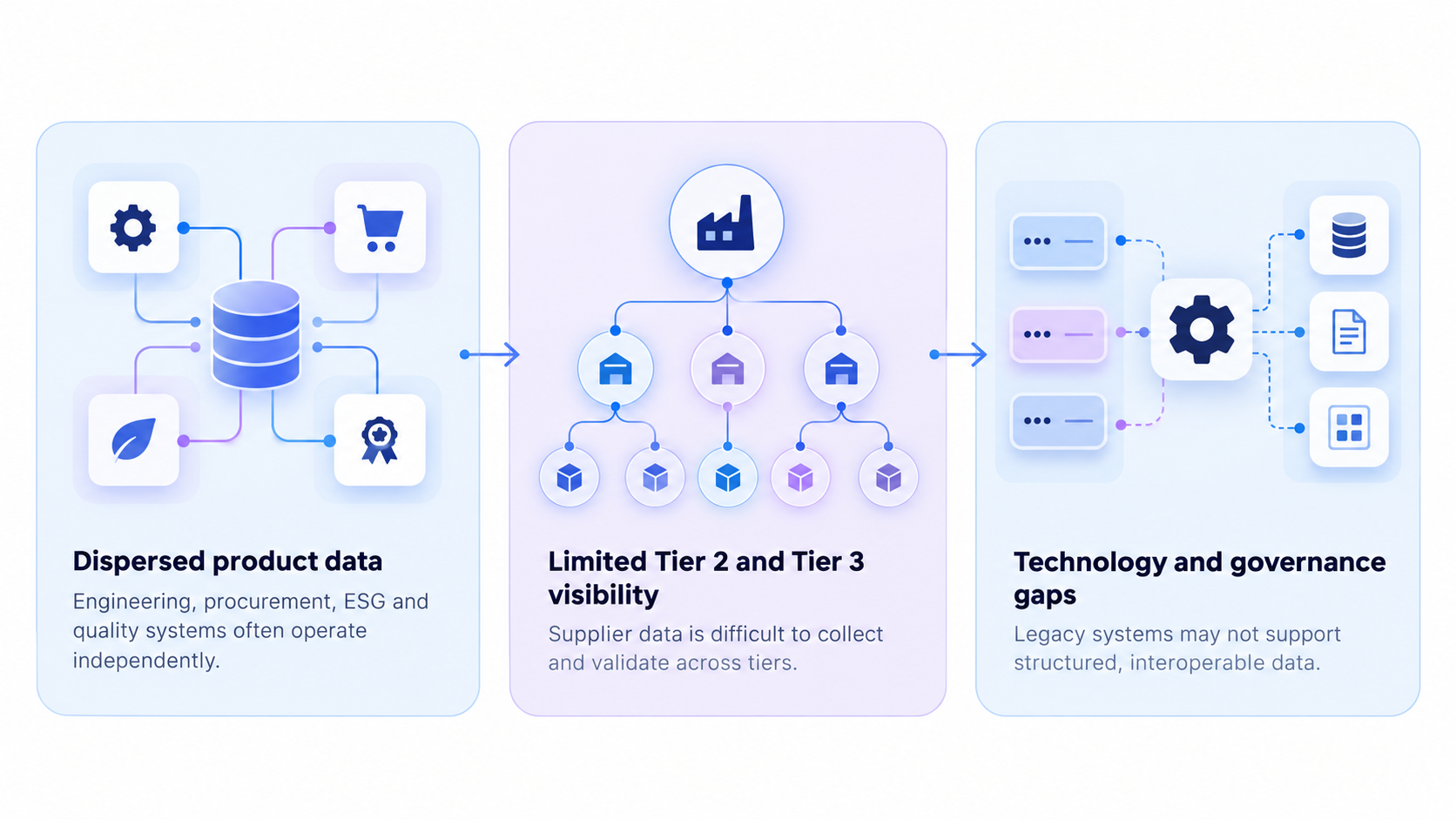
Dispersed product data
Engineering, procurement, ESG reporting, and quality systems frequently operate independently. Consolidating these into one structured framework requires cross-functional coordination.
Limited multi-tier visibility
DPP compliance depends on upstream supplier data. Many organizations lack formalized mechanisms for collecting validated information from Tier 2 and Tier 3 suppliers.
Technology and governance gaps
Legacy systems may not support structured, interoperable data formats. Organizations must invest in centralized product information management and digital traceability capabilities.
A reactive, last-minute approach increases cost and risk. However, treating DPP solely as administrative overhead overlooks its strategic potential.
Reframing DPP as Strategic Infrastructure
When embedded into enterprise systems, DPP can drive long-term operational and commercial value.
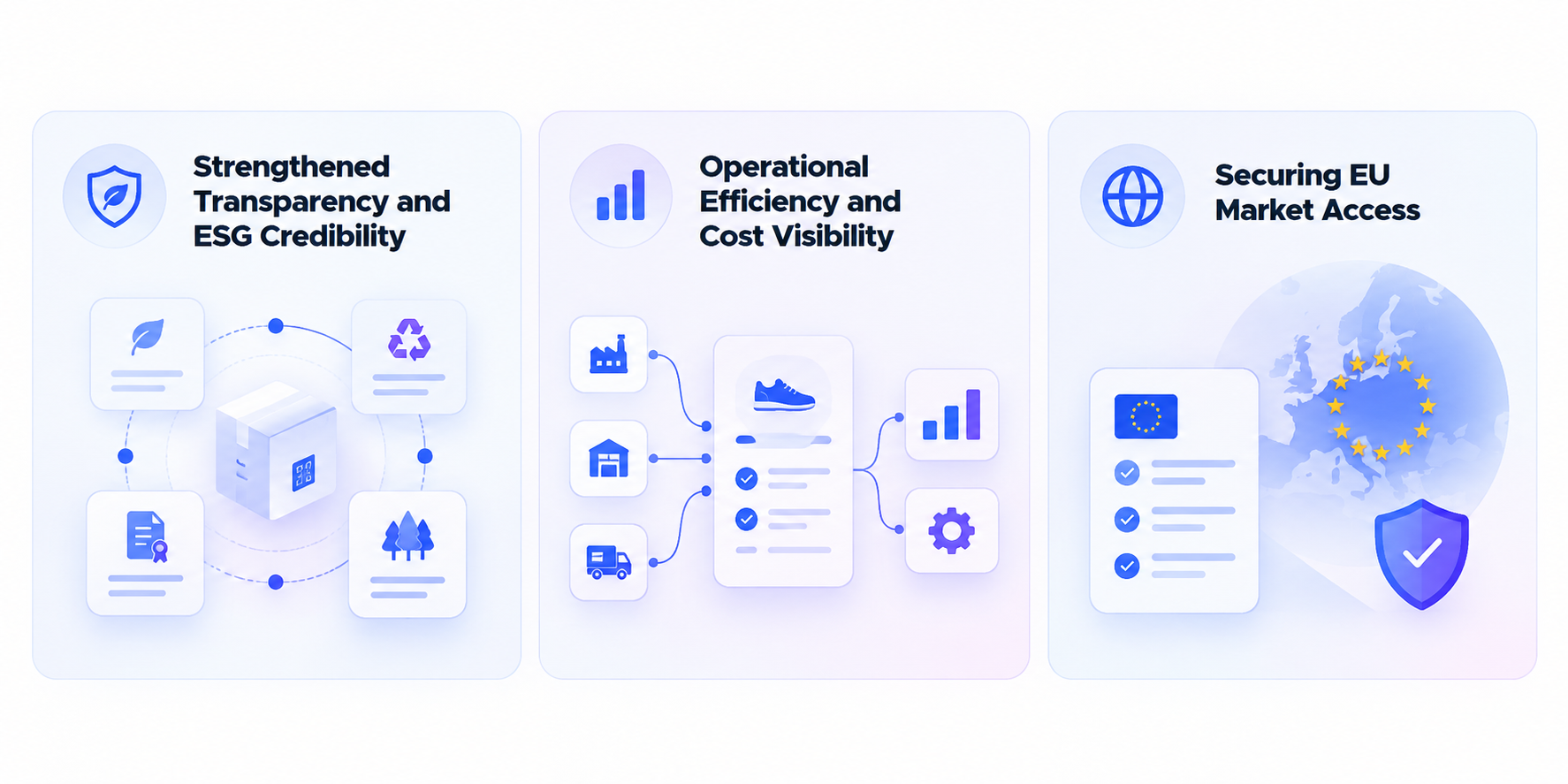
Strengthened Transparency and ESG Credibility
Institutional buyers, investors, and regulators increasingly require auditable sustainability data. A Digital Product Passport provides verified product-level transparency, supporting Scope 3 emissions reporting and responsible sourcing verification.
Instead of relying on generalized environmental claims, companies can present structured, data-backed evidence aligned with regulatory expectations.
Operational Efficiency and Cost Visibility
Mapping product data for DPP often reveals inefficiencies in material usage, sourcing patterns, and logistics. Centralized data management improves quality control, reduces duplication, and enhances supplier accountability.
DPP readiness frequently acts as a catalyst for broader digital transformation.
Securing EU Market Access
Non-compliance may restrict market entry or result in penalties under EU enforcement mechanisms. Early adoption reduces implementation risk and protects long-term revenue streams in the European market.
Organizations that integrate DPP standards now avoid future disruption as additional sectors fall under regulatory scope.
DPP Market Landscape: Growth and Investment Trends
Industry forecasts confirm that DPP is transitioning from policy concept to enterprise-scale investment.
Grand View Research estimates that the Digital Product Passport market will grow from approximately USD 214 million in 2024 to more than USD 1.23 billion by 2030, representing a compound annual growth rate of roughly 35 percent.(3)
Despite variations in market sizing methodologies, analysts consistently project sustained growth driven by regulatory mandates and increasing demand for product traceability.
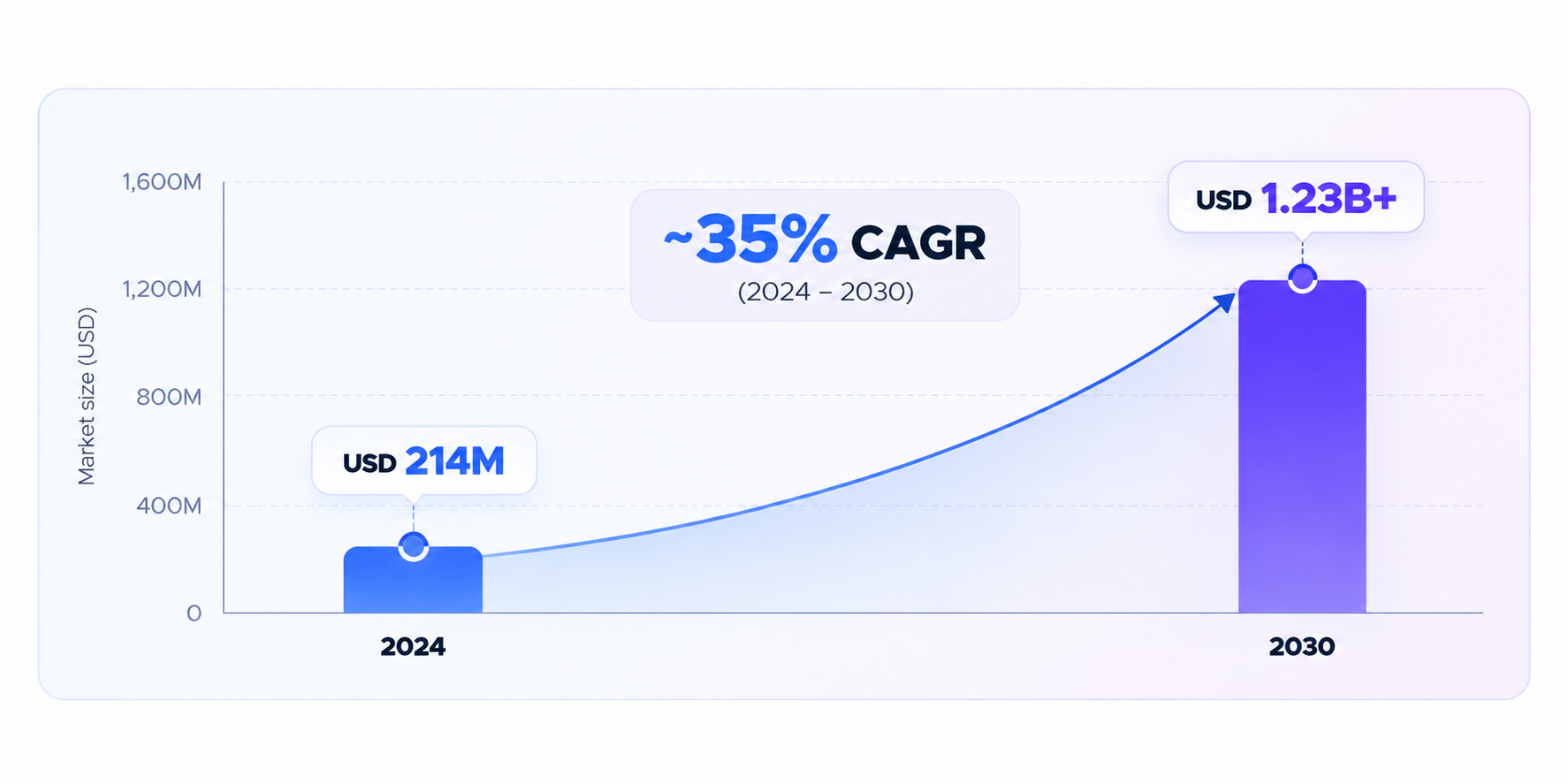
This trajectory indicates that DPP will become embedded within broader compliance, sustainability, and digital governance frameworks.
Actionable Steps to Turn DPP into Advantage
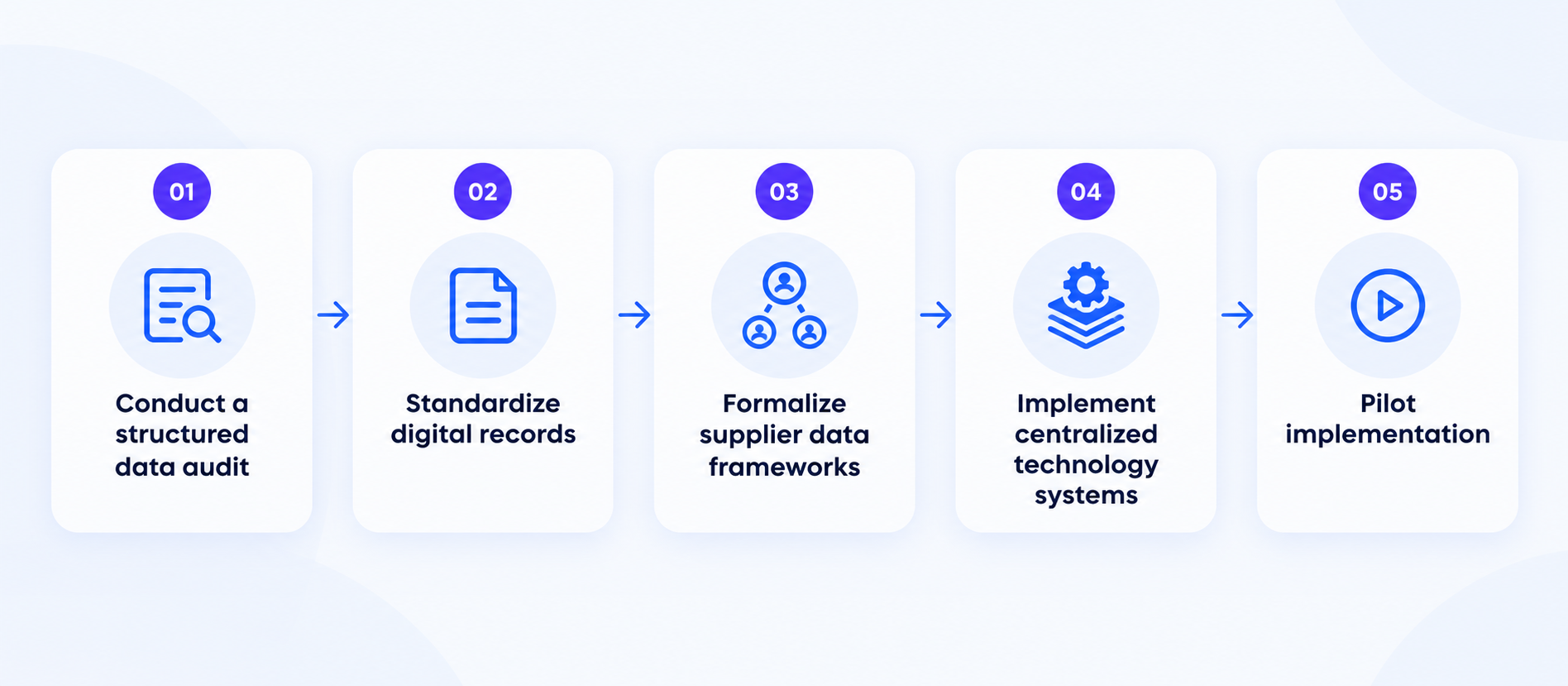
Identify all existing product data sources across engineering, procurement, sustainability, and compliance teams. Document gaps and inconsistencies.
Adopt interoperable data formats aligned with EU requirements and recognized global standards to ensure scalability and integration.
Develop contractual and technical mechanisms to collect validated upstream data across supply chain tiers.
Deploy Product Information Management solutions and traceability tools to create a single source of truth.
Test DPP processes within a limited product category to identify operational challenges before enterprise-wide rollout.
Conclusion
Digital Product Passports are no longer just an EU regulatory requirement. They represent a structural shift toward data-driven transparency, lifecycle accountability, and scalable circular models. For B2B enterprises, early DPP adoption improves operational visibility, strengthens credibility, unlocks new revenue streams, and protects long-term EU market access.
Compliance Cart enables structured data management, traceability, and automated compliance reporting, helping businesses convert regulatory complexity into competitive advantage.
Organizations that prioritize DPP readiness today will not only comply. They will lead.
Start your DPP readiness journey today
Transform evolving European Union compliance into a lasting competitive advantage with Compliance Cart.
FAQs
A Digital Product Passport is a machine-readable, structured digital record that contains verified lifecycle data about a product, including material composition, sourcing, environmental footprint, and reuse or recycling guidance.
DPPs are mandated under the European Union’s Ecodesign for Sustainable Products Regulation and related global initiatives to enhance product transparency, advance circular economy goals, and support accurate sustainability reporting.
Batteries and textiles are among the first mandatory categories, followed by electronics, construction products, and broader consumer goods in phased rollouts through 2030.
Beyond compliance, DPPs strengthen brand trust, enable circular business models, improve operational efficiency, and support data-driven decision-making, positioning sustainability as a competitive differentiator.
Product Information Management systems, blockchain-enabled traceability, IoT-based data capture, and standardized frameworks such as GS1 are critical enablers for scalable and compliant DPP deployment.